[top]Introduction
This is a compendium of information on serious PvE (raiding and challenge modes) as a Balance Druid. It contains everything a beginner needs to achieve basic competence at DPS, as well more detailed discussion for people more interested in understanding the theory or more advanced play. The article is supplemented by the attached spreadsheet.
Anyone posting on the thread should have a good familiarity with the current state of Moonkin theory, either from this guide or from anywhere else. At the very least, do not ask questions that are directly answered in the guide; they will be infracted. It's good to be familiar with things that have been discussed on the thread as well, we start new thread each patch so they don't get too long. In particular, know what's been discussed on the last few pages before posting.
In addition, I tend to discuss any Druid research/theorycraft work I do on Twitter:
Jay (HamletEJ) on Twitter
And I upload videos of myself playing various boss encounters here (currently on hiatus from raiding, but have some challenge mode content here in MoP):
Arawethion's Channel
Some of my current WoW theorycraft goes on this blog:
Warcraft | It's Dangerous to Go Alone
[top]Talents, Glyphs, Skills, and Race
Talents are very different from what they used to be before MoP. For the most part they provide utility-type benefits whose value is dependent on a particular situation. As such, there's no general-purpose correct set of talents, and very often choice of correct talents will depend on your understanding of a particular encounter. I expect much of the discussion on the thread will be about talent choice for specific purposes. For now, some general comments on each tier:
The talent list, for reference.
- Level 15: Passive movement speed is one of the best bonuses there is in PvE. Unless Wild Charge is a solution to a particular boss ability (which will certainly happen at times), use Feline Swiftness. Displacer Beast is also a viable mobility option anytime Wild Charge doesn't get you what you need, but it has a longer cooldown.
- Level 30: Renewal is a strong option for personal survivability, essentially giving you a built-in Healthstone that never runs out and does not use a GCD. Nature's Swiftness slightly improves the utility of your crowd control spells and Rebirth.
- Level 45: This is entirely up to what version of crowd control is best suited to a particular situation.
- Level 60: The first DPS talent. Incarnation [5.3: Force of Nature] is both the strongest DPS talent on average and is a cooldown [completely flexible in timing], so it is currently the choice for any situation.
- Level 75: Once again, 3 crowd control choices. Ursol's Vortex is the only one which can be used at range, so I expect this the most natural for Balance specs, unless a situation really calls for a "hard" (stun/disorient) CC.
- Level 90: The second DPS talent. Heart of the Wild outpaces Nature's Vigil for average DPS, and Nature's Vigil having only a 10% damage boost means it doesn't get too much better due to timer stacking. Nature's Vigil being up 1/3 of the time does make its auto-healing significant.
For reference, the following former talents are now available to all Balance Druids, some with slight variations in functionality: Nature's Grace, Balance of Power, Euphoria, Moonkin Form, Shooting Stars, Sunfire, Solar Beam, Owlkin Frenzy, Starfall, Lunar Shower.
[top]Talent/Skill Details
- Eclipse. The base Eclipse bonus is 15%, and the 15% from Total Eclipse stacks on top of that. The damage bonus is multiplicative. Spells provide Eclipse energy when they complete, and in a change from Cataclysm, the subsequent queued spell will now be correctly affected by entering/exiting Eclipse. If your Mastery rating changes during the Eclipse, the damage bonus changes dynamically.
- Balance of Power: Your base Spirit is not included in the hit rating conversion, only bonus Spirit (green number in the tooltip).
- Moonkin Form: The damage bonus is multiplicative. The spell haste buff does not stack with Wrath of Air Totem or with the Priest talent Improved Shadowform.
- Owlkin Frenzy: This can proc from physical or magical damage, but many boss abilities which hit the player frequently do not proc it.
- Force of Nature: The Treants spam this Wrath spell, and inherit your hit chance, crit chance, and haste. [update: The Treants will attack whichever mob hates you the most, and can be easily redirected with the pet bar. They have 90% reduction against AoE damage in PvE, allowing them to survive some boss abilities.]
- Sunfire: Identical to Moonfire in all respects except appearance and damage type.
- Starfall: This will not fire stars when your character is stunned, and the buff will drop entirely if you shift into a Feral form. The worst use is against a single target, where you only get 10 stars. Against multiple targets, you will get 20 stars total. Each star checks your current spellpower at the time it is fired. Stars will only hit enemies that are aggroed onto a target or are under 100% HP.
- Heart of the Wild: Stacks multiplicatively with Mark of the Wild and Astral Leather Specialization.
One miscellaneous point of mechanics that people should understand: DoT's read their spellpower, haste, and crit values, and any %damage buffs, at the moment they are cast. These do not update while the DoT is ticking. Target debuffs, however, do update dynamically.
[top]Major Glyphs
Very slim pickings here. No Major Glyphs affect our DPS, except that
[Glyph of the Moonbeast] is necessary if you want to use Dream of Cenarius for DPS.
[Glyph of Rebirth] is useful in any raid situation, but not as critical now that the default Rebirth has been increased to 60% HP. Otherwise, use any Glyph that provides meaningful utility at a given fight (but this is mostly limited to
[Glyph of Hurricane] and
[Item not found!]). In Challenge Modes,
[Glyph of Stampeding Roar] is a good choice.
[top]Minor Glyphs
None of these add any DPS, so it's entirely up to personal taste.
Glyph of Grace is the only one that affects game mechanics, and could be of occasional benefit.
Horde: Troll is best for DPS, since it gives Berserking and Beast Slaying. Tauren gives no DPS benefit.
Alliance: Worgen is best for DPS, since it gives 1% crit (Darkflight is also a nice perk). Night Elf gives no DPS benefit.
To be clear on how Symbiosis works, when you cast it on a target:
- Your Symbiosis button changes into a new spell based on the target's class and your spec.
- Their Symbiosis button changes into a new spell based on their class and their spec.
Spells the Balance Druid can gain are:
Here is a handy chart of all spells the target gains.
Make sure to check the tooltips linked above for the Druid's acquired version of these spells, as they are not always the same as the native class's version.
None of the options add any DPS, so you should be making situation-specific utility choices. The best general-purposes options are Undying Resolve, Anti-Magic Shell, and Cloak of Shadows for personal survivability.
In roughly descending order of importance.
Intellect:
Intellect provides 1 spellpower and 0.00039% to crit per point. With Mark of the Wild, Heart of the Wild, and Astral Leather Specialization, it provides
1.169 spellpower and 0.00046% crit (
2168 points per 1% crit, about 3.5 times weaker than 1 crit rating).
Spellpower:
Intellect, without the talent bonuses or crit bonus. Basically a weaker form of Intellect that only appears on weapons and trinkets, but is still good.
Hit/Spirit/Expertise:
340 hit/expertise rating gives 1% to hit with spells, up to the cap of
5100 rating against a level 93 target. 1 Spirit and 1 hit/expertise rating are identical for gear selection purposes (if you ever play Resto at all you probably want to gem Spirit). You always want to cap out hit if you can do so without sacrificing Int. Remember that hit rating over the cap does nothing, so you need to reforge hit to other stats if you gear has more than this amount (see below).
Haste rating:
425 haste rating gives 1% spell haste. Haste is generally a strong stat until you reach
10296 rating, which causes your instant spells to hit the minimum 1 second GCD (with Moonkin Form and Nature's Grace).
Haste adds extra DoT ticks at certain points. Assuming the haste benefits of Moonkin Form and Nature's Grace, breakpoints occur at
5273,
10289, and
15318 (see WrathCalcs for more). With the 4-piece T14 bonus, they are instead at
3706,
8089, and
12517.
Haste also increases the proc frequency of many trinkets, meta gems, and enchants, through the RPPM system.
Critical strike rating:
600 crit rating gives 1% to crit. With a Burning or Revitalizing meta, crits do 2.06 times the damage of non-crits, otherwise 2.00 times. Crit and haste are currently spreadsheeting as nearly identical in value as long as haste is under the GCD cap.
Mastery rating:
320 mastery rating adds 1% to our Eclipse bonus, added to the 30% we have to start with. Generally our weakest secondary stat. Can be strong in sustained AoE or DoT spam situations where you never leave Eclipse. Also, in situations where you stack timers for a strong 30-second burst, mastery will be quite effective.
[top]Stat Priority
The stat priority at the moment can be summarized as:
Int >> hit (to cap) > haste (unless cap) = excess hit (reforged to haste)* => crit > half Int (gems) > mastery > haste (beyond cap)
*The "real" per-point value of hit rating is largely irrelevant, as you always gear/reforge so as to remain hit capped. Therefore the effective value of hit/Spirit/expertise on gear is equal to whatever stat you reforge in/out of to account for the excess hit (crit or haste)
Since gems are changed in MoP to have half as much Int as other stats, all colors of gems are nearly equal in value. As a result, always match colors in each socket. A far as the "second half" of each gem, haste and crit are very closely matched; you can check WrathCalcs for an exact comparison in your gear.
So for example, if caps aren't a factor and you want straight haste, you would gem:
*These slots are tricky. See the note above about the value of excess hit. For basic use, use whichever makes it more convenient to stay at hit cap, the Int or the hit/spirit/expertise version. Advanced players should choose based on whether the excess hit can actually be cashed into haste/crit rating through reforging.
[top]Set Bonuses
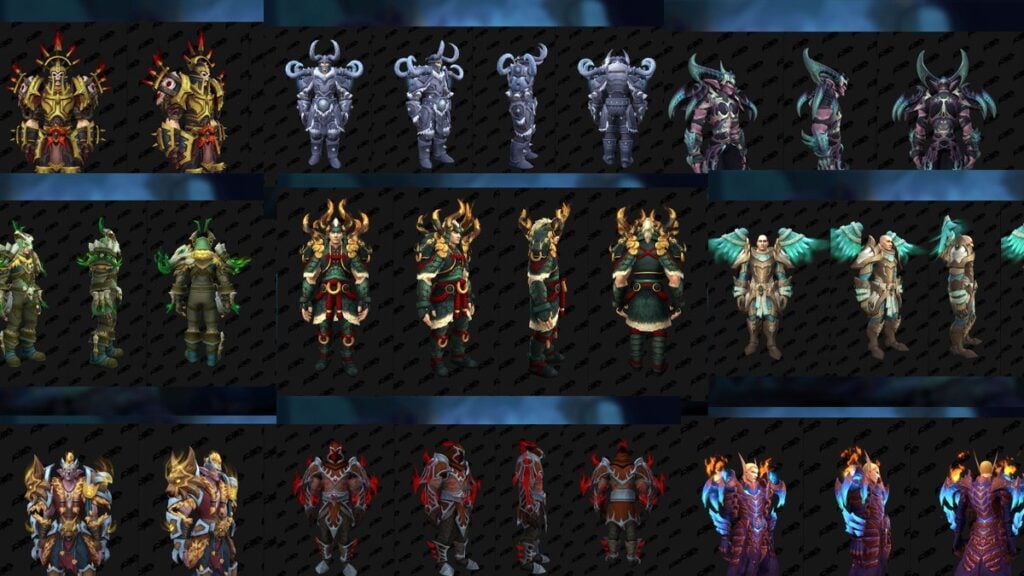
Both of our tier 14 (
Regalia of the Eternal Blossom) set bonuses are in the expected range, roughly 2% DPS. Use them when you have access to them.
The tier 15 (
Regalia of the Haunted Forest) set bonuses are both upgrades over the T14 equivalents, so move to them as soon as you have the gear.
Most trinkets can be evaluated based on their stats just like any other item, if you use the uptime on their proc/use to compute an average stat value. WrathCalcs can also help you evaluate trinkets.
In T15, the best trinket at each tier is
[Unerring Vision of Lei Shen], followed by a close tie between
[Cha-Ye's Essence of Brilliance] and
[Breath of the Hydra].
[top]Unerring Vision
This trinket is highly unusual, requiring you to react immediately to its 4-second proc in order to get the proper value out of it. The moment it procs, drop whatever you were doing and recast both your DoTs on the current target (regardless of whether you're clipping or not). If you're lucky enough to have a timer such as Celestial Alignment available, make sure to press it before the DoTs for a huge DPS windfall. Once the DoTs are up, use as many of the ensuing Shooting Stars procs as possible during the 20 seconds or so that they last (and fill with normal nukes in between).
Because the procs are so rare (even at 50% total haste, expect one every 2 minutes) and require you to react within a GCD or two to get the benefit, you must have a UI alert using WeakAuras or a similar mod. The buff is
Perfect Aim - Spell - World of Warcraft. Make sure you're not going to miss it anytime it fires.
Because of the RPPM system's proc bonus when you've gone a long time without a proc, you'll be increasingly likely to get a proc near the beginning of a fight after being out of combat for more than about 3-4 minutes. If you've been out of combat or haven't gotten a proc for closer to 10 minutes (either on the first pull, or after a break), you'll have a very high chance of a proc near the beginning of the fight. In that case, consider saving Celestial Alignment and other timers for that first proc rather than using them right away. Finally, consider taking the trinket off for trash or practice pulls if you want to ensure a proc on the first pull of the boss [confirm this works].
[top]Activated trinkets
Typically the best time to activate is with your DoT's. Not only does this ensure you get a set of buffed DoT's, but you often refresh DoT's at the beginning of Eclipse. Even better, if it's a 20 second buff (like many are), your 14-16 second DoT's should get a second set of refreshes during the trinket activation. So, macroing trinkets to a DoT is not a bad plan if you don't want to deal with them manually all the time.
Here's a macro you can stick into any spell (such as Moonfire) to activate a trinket without spamming error messages or sounds:
/script UIErrorsFrame:UnregisterEvent("UI_ERROR_MESSAGE");
/console Sound_EnableSFX 0
/use 14
/console Sound_EnableSFX 1
/script UIErrorsFrame:RegisterEvent("UI_ERROR_MESSAGE");
/use Moonfire
(14 is the bottom trinket slot, 13 is the top. Make sure to put these lines before the spell cast in your macro.)
[top]Consumables
Use
[Flask of the Warm Sun] and
[Recipe: Mogu Fish Stew] or similar Int buffs if you don't have access to those.
The best DPS potion is
[Potion of the Jade Serpent]. You want to use it during Bloodlust. When you're trying to completely maximize your DPS, remember you can click a potion just before combat starts (ask your tank to count down), and then be able to use another potion later in the fight.
Excluding profession bonuses.
[top]Professions
Non-gathering professions are all very similar in value, giving a bonus with a benefit of roughly 320 Int. If you're picking fresh professions right now, it looks like Blacksmithing slightly edges out the others, and Jewelcrafting is slightly weaker. However, the differences are too small to be worth switching around existing professions.
Blacksmithing: An extra socket each in your wrists and gloves, each with a
[Brilliant Primordial Ruby], gives
320 Intellect. However since another gem (such as
[Quick Sun's Radiance]) is even better, Blacksmithing can give somewhat more benefit than other professions.
Engineering:
Synapse Springs give 1920 Int, for 10 seconds out of every 60, for
320 Int on average (varies slightly in practice). Has potential to slightly outdo other professions since you can time the use to be most efficient.
A macro similar to the one given above for trinkets can be used for glove tinkers--the glove slot is number 10.
Leatherworking: 500 Int to bracers in place of the usual 180 Int gives you
320 Intellect.
Alchemy: Mixology (with your
[Flask of the Warm Sun]) will give you
320 Intellect.
Enchanting: 160 Int to each ring gives
320 Intellect.
Inscription: 520 Int/100 crit to shoulders in place of the usual is a gain of
320 Intellect.
Tailoring:
Lightweave Embroidery gives 2000 Int for 15 seconds, 20% proc on damage, 60 second cooldown. The average benefit with perfect procs is around 500 Int, minus the 180 Int you usually have on your cloak, for an increase of around
320 Int. This is slightly reduced due to delay on the proc, but increased since you get a proc at the very beginning of the fight, so the end result is similar to other professions, but with a little variance.
Jewelcrafting: 2
[Brilliant Serpent's Eye] in place of 2
[Brilliant Primordial Ruby] gives
320 Intellect. However, since
[Brilliant Primordial Ruby] may not be your best gem (see above), the gain is slightly less. In addition, Jewelcrafting may grow weaker when epic gems are introduced.
Gathering professions are weaker:
Herbalism now gives a haste cooldown via
Lifeblood. At 2880 haste for 20s every 2 minutes, it averages out to
480 haste.
Skinning gives
480 crit rating.
Mining provides 480 stamina, but no DPS gain.
[top]Gear Selection
[top]General Principles
I'm not going to set out full BIS lists here, for a few different reasons. It's best for you to read this guide until you understand the class well enough to choose gear based on the things I've said above. But here's some overall advice to help provide some guidance.
Caster epics have Intellect, Stamina, spellpower in the case of weapons, and 2 out of the 4 secondary stats: crit rating, hit/Spirit, haste rating, mastery rating. Keep in mind a few rules of thumb, which are enough to get a quick estimate of the value of any piece:
- Higher-ilvl gear is stronger. Intellect usually increases very regularly with ilvl, so we have a predictable gain.
- More sockets are better, since the items have more stat points in total.
- As far as secondary stats, gear so as to reach the hit cap and maximize crit and haste, without going past the GCD haste cap. Therefore, Spirit/crit (or hit/crit), haste/crit, and Spirit/haste items are all strong.
- When picking items, don't worry about being over or under the hit cap--that will be addressed in reforging.
Since the 5% Intellect from Leather Specialization is a strong bonus, you should ignore cloth gear.
To compare items more precisely and check for upgrades, use WrathCalcs to test different setups. You can also use WrathCalcs to compute DPS weights for all your stats for guidance. Generally though, the above rules are sufficient to figure out which of two items is better. See below for more on WrathCalcs.
[top]Casting Mechanics
The first rule of DPS is to always be casting (or waiting out a GCD after an instant). Anytime a spell ends, you should already have queued your next one (see below). Don't delay a cast to make a decision or react to proc--train yourself to start another spell regardless of what's going on, and change the subsequent spellcast if necessary after you've had another second to think.
As a preliminary note, this type of macro might be useful for automatically assisting with your nukes when you have a raid member targeted:
#showtooltip
/use [@target, harm, nodead][@targettarget, harm, nodead][] Starfire
[top]Spell Queueing
First, there is an in-game option to decide whether keypresses activate on press or on release. Choose what you like and keep it in mind for learning your timing.
When you send a spell command to the server, if your character is unable to cast immediately (typically because it's still casting or GCD-locked from your last spell), the server will see if you become ready to cast within a certain short window. If you do, it will begin the cast immediately. You can set the length of this window with an interface option called "Custom Latency Tolerance." You want to set this value to a high enough amount that you can always press the next spell key comfortably before the current spell finishes, and never have a gap between casts. But you don't want to set it too high, because you can't change your mind after you queue a spell, so your reaction time is effectively slower if you "lock in" each spell a long time before it begins casting. Experiment and find something you're comfortable with.
[top]Spell Rotations
[top]The Short Version
- Start by applying Sunfire and Moonfire, and casting Starsurge and Starfall. Whenever either DoT falls off the target, or Starsurge or Starfall comes off cooldown, recast it.
- Cast Starfire until until a Solar (Wrath) Eclipse procs, then switch to Wrath. Cast Wrath until a Lunar (Starfire) Eclipse procs, then switch back to Starfire.
- Repeat this Eclipse cycle, always keeping your two DoT's on the target and using Starsurge, and Starfall on cooldown.
- Use Celestial Alignment whenever an Eclipse as just ended and it's off cooldown. Use DPS talents whenever they're available.
For more detail, continue to the following sections.
[top]The Eclipse Rotation
You will generally operate in a four-step cycle.
- Pre-Lunar. Cast Wrath until the Eclipse buff appears (have some mod that will make it very obvious when you gain the buff).
- Lunar Eclipse. When you see the buff, finish casting your current Wrath and then cast Starfire for the duration of Eclipse.
- Pre-Solar. When Eclipse fades, continue casting Starfire until the Eclipse buff appears.
- Solar Eclipse. Cast Wrath for the duration. Continue casting when it ends to loop back around into step 1.
Basically, you cast Wrath until Lunar procs and cast Starfire until Solar procs. But once DoTs and other instants are involved, thinking in terms of the four-phase cycle helps you plan your casts well.
Note that unlike in the past, Starfire is somewhat stronger than Wrath, meaning you do more DPS in the Lunar half of the cycle.
[top]Subtleties of Transitions
Unlike in Cataclysm, if you cast an instant immediately after the nuke that triggers Eclipse, the instant will be affected by Eclipse.
Solar: You want to watch for when your Solar energy is at 60 or higher, so that you know your current Starfire cast is your last one, and queue a Sunfire or other Solar spell.
Lunar: Wrath now, like Starfire, gives its energy on cast completion. If your Lunar energy as you start a Wrath is 70 or higher, queue Starfall for your next spell (even if it looks like it's on cooldown), followed by Moonfire or other Lunar spell.
Do your best to avoid casting extra spells beyond what's necessary to proc Eclipse.
If you use the mod Balance Power Tracker (below) things look slightly different. That mod can display a modified energy bar, which projects your energy value from currently casting spells, so all you have to do is check for when it reads 100. Remember that if you move or interrupt a cast though (or if your spell misses), your energy will appear to go back down.
[top]Managing Eclipse
We now have the ability Astral Communion to set our energy to whatever value we like (multiples of 25) in advance of an encounter. As you attempt a particular fight more and more, you can sometimes plan out your Eclipses for certain AoE/movement phases. I'm not going to give a boss-by-boss guide here, but you should pay attention to the order of events in each fight and refine your routine. An important point is that you always delay an Eclipse by spamming Moonfire with Lunar Shower or casting the off-Eclipse nuke, so sometimes you can use that to control when you enter or leave Eclipse at various points in an encounter. At some encounters, planning out your Eclipses at specific points in the fight will be a major part of doing good DPS. Most commonly, when a fight has AoE phase, you will want to do whatever is necessary to make sure you're in Solar when that phase begins, by delaying Eclipses as necessary.
Typically you will start an encounter by going to 75 energy towards Lunar (this requires 3 casts of Astral Communion if starting from neutral, since it goes towards Solar first), so you can start Lunar with one Wrath at the beginning of the encounter (more detail in Advanced Techniques).
By and large, you want to use this whenever it's available. There is one major exception: do not cast Starsurge twice within the same Solar Eclipse. This will cause you to be at 0 energy (instead of 5 energy) after 6 total spells, ending Solar one cast early. It's fine (in fact, it's good) to cast a second Starsurge at 5 energy, as the final spell of Solar, if you have it available.
A more minor exception is that if you are close to a new Eclipse, saving Starsurge for Eclipse can be slightly better, as long as this does not increase the number of casts to reach Eclipse. If you're unsure, using Starsurge whenever it's up (subject to the above exception) is fine.
[top]DoT Refreshing
DoT's are similarly strong as they were in Cataclysm. You want to do your best to maintain very high uptime on both of them (Sunfire has replaced Insect Swarm, but no change conceptually). Typically, the only time you will hold up recasting of a DoT is if it falls off and the corresponding Eclipse is coming up very soon and/or you don't have Nature's Grace--you'll wait one or two casts and refresh at the beginning of Eclipse. If both DoT's are coming up at around the same time when you start Eclipse, casting the non-Eclipse DoT first gives a very minor improvement due to Lunar Shower.
In practice, the duration of a DoT (around 14 or 16 seconds) is similar to the time it takes to get from one Eclipse to the next, so it's easy to work in a pattern where you recast both DoTs at the beginning of each Eclipse. If you are at all interrupted during Eclipse and your Eclipse DoT is close to falling off, you can refresh it (even clipping slightly) just before leaving Eclipse.
Remember that Cataclysm changed the way DoT refreshing works--when you refresh a currently ticking DoT, you no longer waste a partial tick. Significantly, if you refresh a DoT when it has only one tick remaining, there is no loss at all.
DoT ticks use your spellpower, haste, and +% damage (e.g. Eclipse) values from the moment the DoT was cast--they do not update in real time until the next time you cast the DoT. Crit chance of the ticks, on the other hand, does change dynamically if you gain or lose crit buffs while the DoT is ticking. Because the entire DoT is effected by your stats at the moment of cast, there can be detailed decisionmaking in when to apply them--see "Advanced Points" below for more.
- Starfall: Cast this as your first spell of Lunar Eclipse. Given the new cooldown refresh mechanism, there's very little reason to do anything else, unless there's an important set of multiple targets to hit with it later in the same cycle.
- Celestial Alignment: Use this immediately after ending an Eclipse. It does not consume a GCD, so cast another spell immediately as it starts (macroing a Moonfire into CA seems reasonable). Typically you want to get Starfall and Moonfire going as soon as you start. You usually want to refresh Moonfire just before CA falls off, especially if you also have Incarnation up.
- Incarnation: You want to use this whenever you can have it affect an Eclipse and a Celestial Alignment immediately after. This means you should use Incarnation at the beginning of the Eclipse before you're planning to use CA. Since they're on the same cooldown, you should be able to do this all through the fight.
- Nature's Vigil: use this together with Incarnation and/or Celestial Alignment for best DPS. Between Incarnations, use it exactly on cooldown even if it doesn't line up well with Eclipse, so that it's ready for your next Incarnation or CA.
- Force of Nature: use this as many times as possible in a given fight. Make sure you always cast it when Nature's Grace is active. There's no special benefit for having a buff active at the moment you cast this; the Treants' attack power and haste change dynamically with yours. This macro is handy:
/use Force of Nature
/petattack
This way, while your Treants are out, you can just press your FoN button again to make them attack your current target.
[5.3: With the new "charges" mechanic, you gain the ability to summon one Treant every 20 seconds, and can store up to 3. So you want to make sure to you them often enough that you ever cap out at 3. In general, you can get good value by casting all your stored Treants every time you start an Eclipse (to benefit from Nature's Grace). Remember that they no longer use a GCD. If you know that a large buff like Bloodlust is coming, or a DPS burst requirement, you can save them for up to minute to get 3 charges.]
- Heart of the Wild (Cat): This is no longer a DPS increase.
- Dream of Cenarius: Not technically a cooldown, but fits here. At the beginning of each Eclipse, cast Healing Touch before casting both DoTs. Once per minute, remember to use Nature's Swiftness so it takes less time.
[top]Utility Spells
These have a small portion of the guide, but don't be deceived--good use of them tends to be the hallmark of top players. But no advice I can give here is a substitute for awareness and familiarity with your class.
- Typhoon, Mighty Bash, Disorienting Roar: remember that these can interrupt spellcasting of PvE targets.
- Faerie Fire: We no longer need to use this unless the raid is missing an Armor debuff (Sunder Armor or Expose Armor). Note that while the Faerie Fire debuff itself lasts 5 minutes, the armor reduction must be refreshed every 30 seconds.
- Innervate: There's essentially no reason to cast this on ourselves with the huge mana return from Euphoria, but remember the option if you're trying to Hurricane a lot or something. Otherwise, it's not too powerful anymore, but try to give it to healer on cooldown.
- Rebirth: The most important issue is to avoid wasting it, especially now that the raid can only use a limited number per attempt (3 in 25-man, 1 in 10-man). People love to accept the resurrection as soon as it appears and die to something immediately. It can be good to warn them if it's a bad time to accept, and Glyph of Rebirth provides further insurance. Remember that Rebirth drops Moonkin Form unless you have [Glyph of the Moonbeast], so be ready to reshift as your next cast.
Here's a macro that casts Revive instead of Rebirth if you're out of combat, and also alerts your raid if Rebirth is used:
#showtooltip
/use [nocombat] Revive
/stopmacro [nocombat]
/use Rebirth
/ra Rebirth on %t
- Tranquility: This spell does quite a large amount of healing due to our high spellpower (only slightly less than that of a Resto Druid). Don't forget to use it at some point during the fight when the raid has taken a lot of damage. If you have Heart of the Wild and are not using it for anything else, remember to pop it before starting Tranquility.
- Dash, Growl, Might of Ursoc, Stampeding Roar: Now that these can be used without having to shift form or wait for resources, you should have them keybound and ready to use at any time. Might of Ursoc is least useful as it fades if you shift out of Bear.
[top]Bloodlust/Heroism
Nothing significant will change during the rotation, except that DoT's become very good. Make sure to DoT any possible target as soon as Bloodlust starts, probably even clipping any existing DoT's at that point (use any timers here if possible, such as Berserking and your Potion, and especially Celestial Alignment). If you have a Nature's Grace near the beginning of Bloodlust, even better to spam DoT's with.
The basic solution to any movement situation is to try to get the most out of DoT's and Lunar Shower. Cast Moonfire/Sunfire the instant movement begins (or even just before) to start stacking the buff, then spam it on the target while running. Use Shooting Stars when it procs. Planting Wild Mushrooms at the enemy's feet while moving take some practice but is worthwhile if there are multiple targets; remember that you can wait until your next Solar Eclipse to detonate them. Finally, if at all possible, you want to be in an Eclipse for movement, although you might often have little control over this.
It's important to manage our DoTs well during high-movement situations. You want to plan your casting so that you cast DoTs (or other instants) while moving, and nukes while standing still. This requires you to be highly aware of both your spell rotation and your surroundings, so you can anticipate movement. It's always worth delaying a DoT by a few seconds to cast it while moving, so you can cast another nuke while still. This also holds true for other instants.
[top]Multiple Targets and AoE
In multi-target (3 or more) situations, use a mix of Wild Mushroom, Hurricane, and DoTs.
- It is better to be in Solar, since WM is buffed and Hurricane is better than Astral Storm. However, being in Lunar is still better than being outside of Eclipse. Note that even if you use Celestial Alignment in Lunar or post-Lunar, you will have Astral Storm and not Hurricane.
- Wild Mushroom is slightly lower DPET than Hurricane, so you no longer have to drop a set of 3 WM's on cooldown against clumped targets. However, since they can be placed in advance, good planning still lets you use them for extra burst along with Hurricane.
- With 4 or fewer targets, put up both DoTs on anything that's going to live for the full duration. With more targets or for AoE lasting for a shorter time, either put up the Eclipsed DoT only or just use Hurricane.
On encounters with a major AoE component, a big part of your planning should revolve around being in Solar Eclipse at the right time.
[top]Advanced Techniques
The Balance spec has a number of interacting buffs and procs, making it currently one of the complex classes in the game to play well. There's no concise list of rules for what to cast and when (which is part of why this guide is so long); you need to have the solid understanding of how the different abilities works and use your judgment in a variety of situations. When you feel you've mastered the basic techniques described so far, here are more subtle points you can try to start working into your play:
- Unlearn your Cataclysm habit of casting one Eclipsed spell before a DoT. You now want to queue your first DoT or Starfall immediately following the final post-Eclipse spell.
- Similar, you can no longer sneak in a DoT or instant Starsurge after the final Eclipsed spell. If you want to clip a DoT at the end of Eclipse, it must be done before the last nuke of Eclipse.
- When casting two DoTs at the beginning of Eclipse: cast the Eclipsed DoT, then the uneclipsed DoT (unless you expect to clip the Eclipsed DoT for any reason), then Starsurge if it's up. In Lunar, cast Starfall before all other spells since its DPS drops when Eclipse ends, unless you're using the DoT clipping technique, in which case you cast it after the Moonfire.
- Assuming you don't have Soul of the Forest: When Solar Eclipse starts, use the first Starsurge you have available. If a second SS procs during the Eclipse, save it for when you have 5 energy remaining (if you don't use BPT, queue it when the energy bar reads 20 and you're casting a Wrath). Depending on whether you got the proc, you'll be at either 10 or 15 energy in post-Solar. Wrath 3 times to reach Lunar and save any SS procs for the beginning of Lunar.
- In all cases, in Lunar Eclipse, simply cast Starsurge when it comes up.
- There are a wide variety of things that affect the damage done by a DoT at the time you cast. A non-exhaustive list: Nature's Grace, Eclipse, Incarnation, Nature's Vigil, trinket procs, Lightweave/Synapse/Power Torrent, Bloodlust, Potion, Berserking. Depending on you closely you monitor your buffs (there's no way you can watch all these things effectively without a mod organizing your buff information), you can squeeze out extra DPS by watching what's going on as you refresh DoT's, and adjusting slightly earlier or later as necessary.
- This also means that if you're moving, sometimes you don't want to use the usual Lunar Shower spam because it will overwrite a strong DoT with a weak one (for example if Eclipse just faded). This is the sort of situation where you might plant Wild Mushrooms to fill time for 3 GCD's, and detonate them at any later time, such as during Solar Eclipse.
- From a reset Eclipse position, Starsurge and Celestial Alignment will give Solar energy. Keep this in mind when setting up for a pull, depending on which Eclipse you want to start with (which Eclipse this is depends on your plan for the fight). A solid starting routine is important, because you have your Volcanic Potion, first set of trinket procs, and often Bloodlust, and want to maximize their effect. Pay particular attention to DoT refreshing.
- At the beginning of a fight, start at 75 energy towards Lunar, and open with Starfall, then Wrath to start Lunar. Recast Starfall during Lunar as soon as it ends, and then again during Celestial Alignment. This results in an opening sequence that looks like:
Starfall, Wrath, Incarnation, Sunfire, Moonfire, Starsurge, Starfire, Starfall, Starfire x3, Celestial Alignment, Moonfire, Starfire/Starsurge, Starfall, and then proceed as usual.
- When starting Lunar, if you note that your next Lunar is going to be the one that you Incarnation, don't use Starfall at all, and instead use it just before the next Lunar (similar to the beginning of the fight).
There is only one addon I use that is specific to Balance spec:
Balance Power Tracker: An alternative energy bar. Among various display features, this bar has the option to add the expected energy from currently casting/spells to your energy bar, to help you see when you need to swap spells for the next Eclipse. Try this feature out to see if you like it, but remember that if you've been practicing with the default energy bar, the timing change will take a bit of getting used to.
WrathCalcs (attached to this post). Moonkin theorycraft spreadsheet. Will give you the exact value of stats/talents/glyphs in your current setup, and lets you experiment with different rotations. Originally made by Adoriele
here. I've since taken it over and used it as the platform for my own theorycrafting, reflected in the version posted here.
For those of you who used WrathCalcs in Cataclysm, things are the same. There's a front page where you can select gear, gems, enchants, and reforges from drop-down menus. Stats are automatically totaled and passed to the second page, where you'll find all the other features: talent and buff selection, and detailed outputs.
For everyone else, here's a basic description to get you started:
1) Input your gear, gems, enchants, and reforges on the front page. The basic rule is that any light-blue box is a dropdown menu where you can choose something. The sheet will automatically black out any enchant/gem slots that don't exist, and will highlight any inactive socket bonuses or meta gems in red. To un-reforge (or un-gem or un-enchant) and item, just the delete the current reforge/gem/enchant selection.
2) On the second page, input your talents, glyphs and buffs. Again, light blue boxes are menus where you can enter your setup. Don't modify the pink boxes, which are the stats inherited from the front page--these are shown so you can see the stat weights (see below). You can also set some parameters about how you use your spells in the purple boxes.
3) Basic results are in green boxes. You can read your overall DPS in the "main results" box (also copied to the front page so you can easily see how it changes when you change gear). Other green boxes show your hit/haste breakpoints, the DPET of each of your spells, and the damage breakdown of all your spells.
4) Advanced results are in the blue boxes. These require the use of data tables, which you have to recompute manually by pressing F9. These include:
a) next to each stat, buff, glyph, and talent, the amount of DPS and MP5 derived from that particular thing. For stats, it shows the benefit of having 1 more of that stat. For talents and other bonuses, it shows the value you currently gain from that bonus (i.e. the amount you would lose by dropping it).
b) next to the spell table, the amount by an additional stat point improves each individual spell.
There is now one version of the sheet for both Excel and OpenOffice. OO users select "OpenOffice" from the dropdown on the first page, and everything should work (except for the data tables/advanced outputs, which are not supported by OO).
There's also a profile save/load feature now (only works in Windows Excel) so you can swap between different gear sets more easily.